
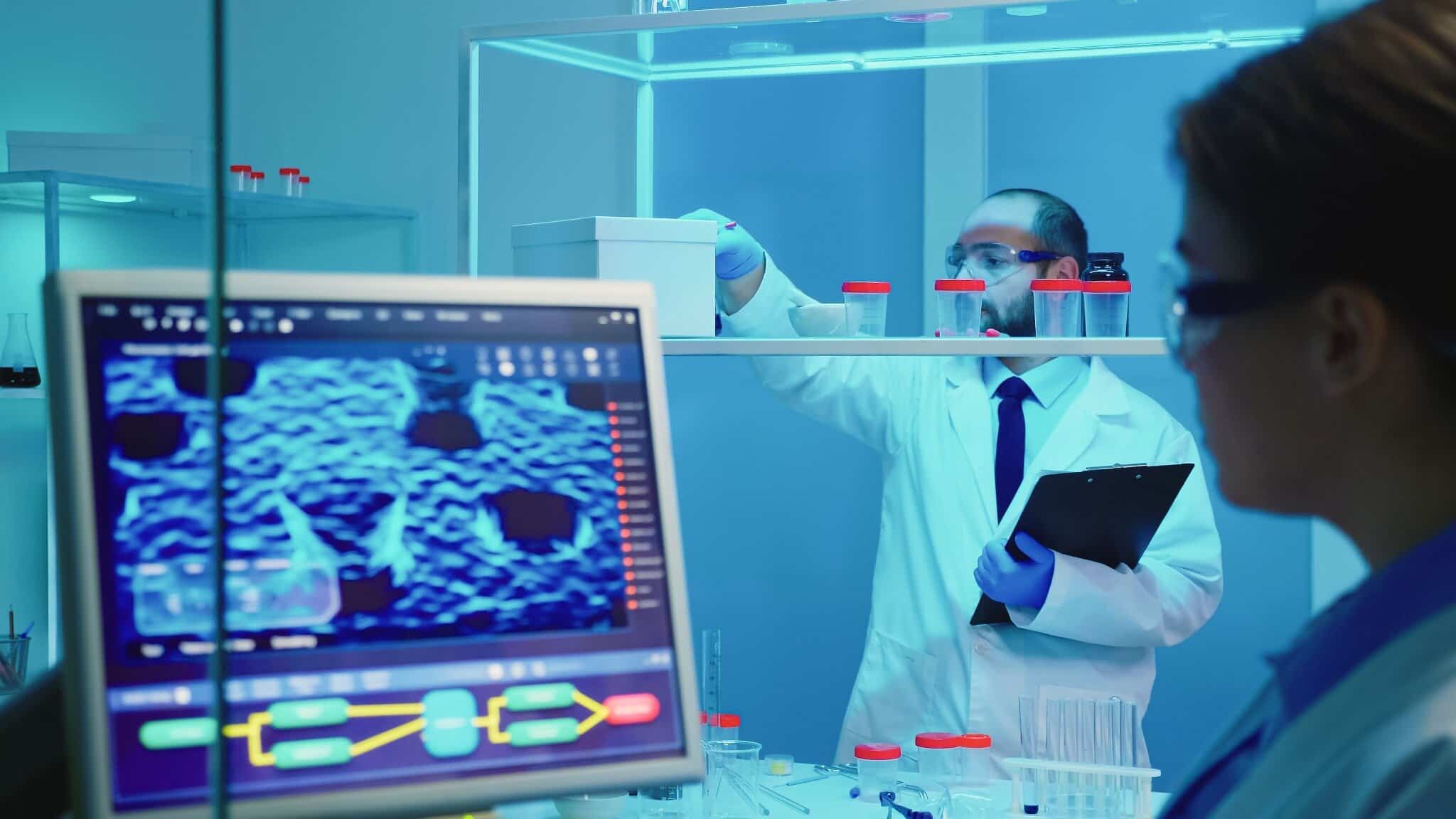
For decades, medicine has relied on diagnosing and treating diseases once they have become clinically apparent. Today, however, the integration of artificial intelligence, big data, and advanced biomarkers is driving a new paradigm: predictive medicine. Rather than simply recognising disease, this approach aims to anticipate it by identifying early signals and risk trajectories before they become clinically evident.
The invisible phase of disease in predictive medicine
Medicine has long been rooted in the ability to diagnose and, consequently, treat disease. For many years, it has operated within what could be described as the visible phase of disease: the stage at which symptoms emerge and diagnosis becomes possible. Recent research, however, suggests the existence of an invisible phase of disease: a stage in which symptoms have not yet appeared, but significant biological changes are already taking place within the body. Disease is rarely a sudden event; rather, it follows a trajectory composed of silent early stages that are often indistinguishable from normal physiological processes.
What if medicine could identify these stages before symptoms arise? Predictive medicine is built on precisely this premise: that risk can be measured before disease manifests. Not as an abstract probability, but as the outcome of an integrated analysis of individual data. This approach does not replace diagnosis, it precedes it, fundamentally changing its meaning. The goal is no longer simply to identify disease, but to recognise the moment it begins to take shape, even before it becomes clinically detectable. It is a subtle yet profound shift, redefining medicine itself: moving from an exclusively reactive discipline towards one that is increasingly anticipatory.
The role of artificial intelligence in predictive medicine
Among the key drivers of this transformation is artificial intelligence, not merely as a standalone technology, but as a powerful tool for analysing and interpreting complex biological systems.
Increasingly sophisticated algorithms can now process vast amounts of heterogeneous data, including diagnostic imaging, biological parameters, blood test results, and genomic information, revealing correlations that would be difficult to detect using conventional analytical methods. In high-intensity clinical settings such as intensive care, these capabilities are already translating into faster and more accurate diagnoses. Their greatest contribution, however, lies in the identification of early patterns: weak signals distributed over time that become meaningful only when analysed within a broader biological context.
Consider the enormous amount of health data generated throughout an individual’s lifetime: electronic health records, laboratory tests, diagnostic imaging, and genomic information. Viewed in isolation, these data points may reveal very little. Analysed collectively, however, they become pieces of a larger puzzle capable of outlining disease trajectories and identifying individuals at increased risk before symptoms emerge. Recent studies show that models based on longitudinal data can identify high-risk individuals with significantly greater accuracy than traditional assessment criteria. Even apparently routine information, such as standard blood test results, can be reinterpreted through computational models to detect early signs of disease, paving the way for more accessible, scalable, and personalised screening strategies.
Towards an integrated biology of prediction
Predictive medicine extends well beyond the analysis of clinical data alone. Its strength lies in integrating information from multiple layers of biology, ranging from genomics and proteomics to metabolomics and digital data collected through wearable devices.
This integrated approach enables clinicians to view the patient as a complex biological system, in which molecular, physiological, and behavioural information interact to provide a more comprehensive picture of health. As a result, the ability to stratify risk continues to improve, making it possible not only to anticipate disease onset but also to predict disease progression and treatment response.
In this context, prediction is no longer a simple probabilistic estimate. It becomes the outcome of a multilayered interpretation of biological systems, made possible by integrating heterogeneous data and analysing them with increasingly sophisticated computational tools.
From prediction to early intervention
If prediction represents the first step, intervention remains the ultimate goal. So-called predictive-interventional medicine aims to use identified risk to guide concrete clinical decisions, including lifestyle modifications, personalised monitoring strategies, and early therapeutic interventions. This approach is based on the idea that disease is a dynamic process unfolding through successive stages, and that there is a critical window during which its course can still be modified. From this perspective, medicine is no longer limited to treating what has already happened. Instead, it intervenes while disease is beginning to develop, with the aim of preventing or slowing its progression.
Balancing innovation, ethics, and responsibility
Despite its enormous potential, predictive medicine raises important scientific, clinical, and ethical challenges. The performance of predictive models depends fundamentally on the quality of the data on which they are trained. Their interpretability is essential for successful clinical adoption, while ethical considerations surrounding the collection, management, and use of personal health data remain central. Equally important is the need to ensure equity and representativeness, preventing models trained on incomplete or biased datasets from reinforcing existing healthcare inequalities. For predictive medicine to deliver meaningful benefits to patients, transparent, validated, and clinically integrated models will be essential, models in which artificial intelligence supports, rather than replaces, clinical judgement.
Ultimately, predictive medicine is reshaping our relationship with time itself. Disease is no longer viewed as an inevitable trajectory, but as a dynamic process whose course can be modified. In this new paradigm, anticipating disease often means intervening earlier, improving clinical outcomes, and redefining the very role of medical care.
For further reading
- Park J. et al. “Toward scalable early cancer detection: evaluating EHR-based predictive models against traditional screening criteria.” Columbia University Irving Medical Center; 2025.
- Di Fazio N. et al. “Artificial intelligence for early diagnosis in emergency department.” Journal of Anesthesia, Analgesia and Critical Care. 2026;6:7.
- Al-Ewaidat OA & Naffaa MM. “Emerging AI- and biomarker-driven precision medicine in autoimmune rheumatic diseases: from diagnostics to therapeutic decision-making.” Rheumato. 2025;5:17.
- Khare PS. et al. “Artificial intelligence and precision medicine for optimizing patient care: a comprehensive review.” Intelligent Hospital. 2025.
- Predictive intervention medicine: a ML/AI/big data-driven pathway toward better healthcare system in the future.Medicine in Drug Discovery. 2025;28:100225