
In the landscape of scientific societies, membership is no longer a purely quantitative matter. It’s not simply about increasing registrations, but about building a community that is relevant, active, and recognisable over time.
Today, the context has changed significantly. New generations of professionals (physicians, researchers, specialists) are not just looking for belonging, but for value. Educational value, relational value, identity value. This shift is prompting scientific societies to rethink their engagement strategies at a deeper level. In this evolving scenario, the role of an international professional congress organiser goes beyond event management, becoming a strategic enabler in building attractive and sustainable ecosystems.
Beyond membership: building perceived value
The first, and often underestimated, lever is perceived value.
For a potential member, joining a scientific society means investing time, resources, and attention. The underlying question is always the same: what do I gain in return?
The most forward-thinking organisations are shifting from a static offering to a dynamic ecosystem of opportunities:
-
access to exclusive, up-to-date content
-
opportunities for high-quality networking
-
active involvement in scientific projects
-
visibility within the community
Offering a high-level annual congress is no longer enough. What’s needed is a continuous experience, one that supports and engages professionals throughout the year.
The role of events as entry platforms
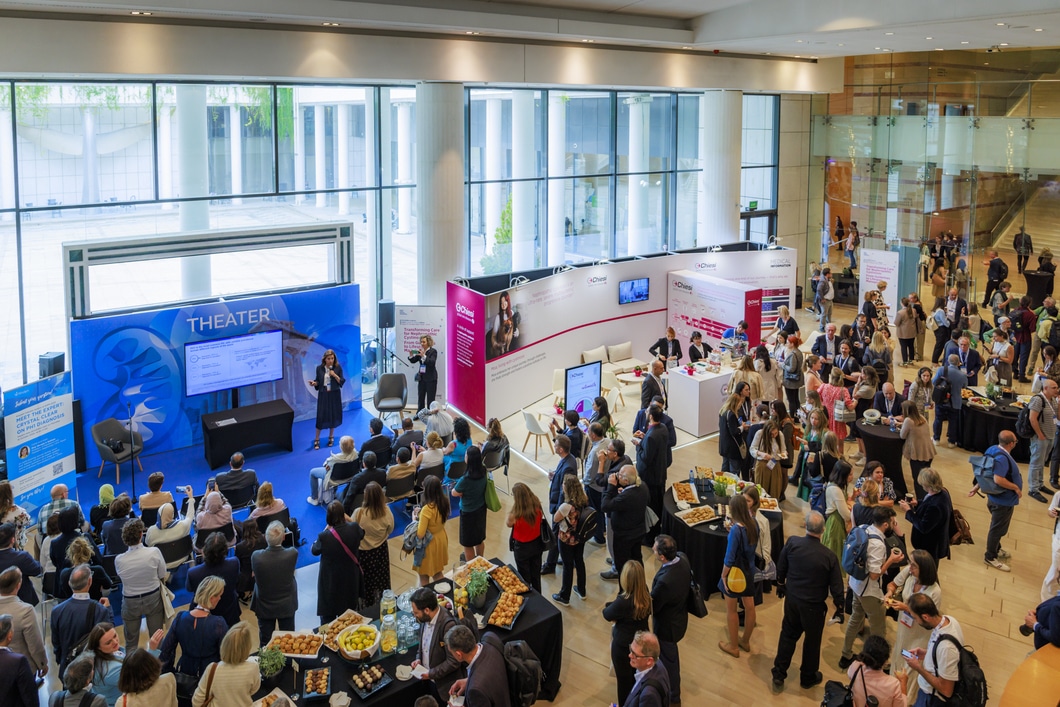
For many scientific societies, the first real point of contact with a potential new member still happens at a congress. But reducing it to a simple moment of knowledge exchange means overlooking much of its potential. Today, an event is a space of transition. It’s where participants begin to recognise themselves within a community, not only through the content they engage with, but through the relationships they build, the conversations that emerge, and the way they are involved.
When this dimension is intentionally designed, a congress moves beyond being a standalone moment and becomes an entry experience. It’s no longer just about attending, it’s about beginning to belong. And this often comes down to details: who has the opportunity to contribute, how different levels of experience are connected, and what spaces exist to move beyond passive listening and foster real dialogue. In this sense, designing an event means designing relational dynamics.
This is where the contribution of a professional congress organiser becomes strategic: in the ability to translate association goals into tangible experiences, where every moment aligns with the kind of community the organisation aims to build.
New generations: from target to active contributors
For years, young professionals have been seen as a “target to engage.” Today, that perspective is showing its limits.
New generations are not simply looking for access to high-quality content, that is now taken for granted. What they are looking for are spaces where they can contribute, take a position, and be an active part of the scientific and professional conversation. This is where many scientific societies still face challenges: communication often remains top-down, while value is increasingly shifting towards more open models, where contribution is not limited to a few, but shared across the community.
When young professionals are given the opportunity to take part in decision-making processes, or even just to bring their perspective into events, the dynamic changes. And this has a direct impact on the ability to attract new members. Because what truly makes a scientific society appealing today is the space it creates for those who choose to be part of it.
Communication and positioning: making value visible
Scientific societies generate value every day through content, relationships, and opportunities for growth. The real challenge today is making that value visible in a clear and recognisable way. In an increasingly crowded landscape, what truly works is communication that shows what actually happens within the community. Not just the programme of a congress, but the people behind it, the moments of exchange, and the professional paths that emerge from it.
Some organisations, for example, are developing ongoing editorial formats: member interviews, stories of scientific projects born within the society, and content that follows young professionals throughout their journey. In doing so, communication becomes a narrative space that makes the value of belonging tangible. This way, those looking from the outside don’t just see an organisation, they begin to recognise a place where they can belong.
Looking ahead: membership as an experience
Membership is evolving towards a more experiential dimension. Today, an increasing number of societies are introducing differentiated pathways for their members – such as dedicated content for young professionals, privileged access to advanced training, and opportunities to actively contribute to congresses or scientific boards. The goal is not just to expand the offering, but to make it clear and accessible: what happens when you join, what opportunities open up, and how you can grow within the community.
Organisations that succeed in this build a coherent experience, where every touchpoint – from live events to digital content – contributes to reinforcing perceived value. In an increasingly competitive landscape, it is precisely this clarity that makes the difference between a formal membership and one that is truly meaningful.
All of this requires vision, structure, and the ability to connect the many elements that shape the life of a scientific society. This is where the contribution of a professional congress organiser becomes essential. A PCO such as OIC Group works on the overall design of the experience: connecting physical and digital moments, translating association goals into tangible formats, and supporting the development of consistent engagement pathways over time. From defining the touchpoints between events and community, to creating formats that highlight members, to integrating scientific content, communication, and relationships: the real value lies in giving structure to what would otherwise remain fragmented.