
Working every day alongside scientific associations, healthcare professionals and research organisations inevitably broadens your perspective. Health is not defined solely by what happens in hospitals, laboratories or scientific congresses. It is the outcome of a much wider set of social, environmental and cultural conditions that make prevention, healthcare and, before that, a life of dignity possible.
This is the vision that underpins OIC Group’s Corporate Social Responsibility journey and that now finds a new expression through our partnership with Oxfam Italia, supporting the Our Business: Water to Save Lives initiative and its WASH (Water, Sanitation and Hygiene) programmes.
Why talking about water means talking about public health
Discussions around healthcare often focus on therapeutic innovation, precision medicine, artificial intelligence and clinical research. These are fundamental topics and part of the everyday work we carry out alongside the scientific associations we support.
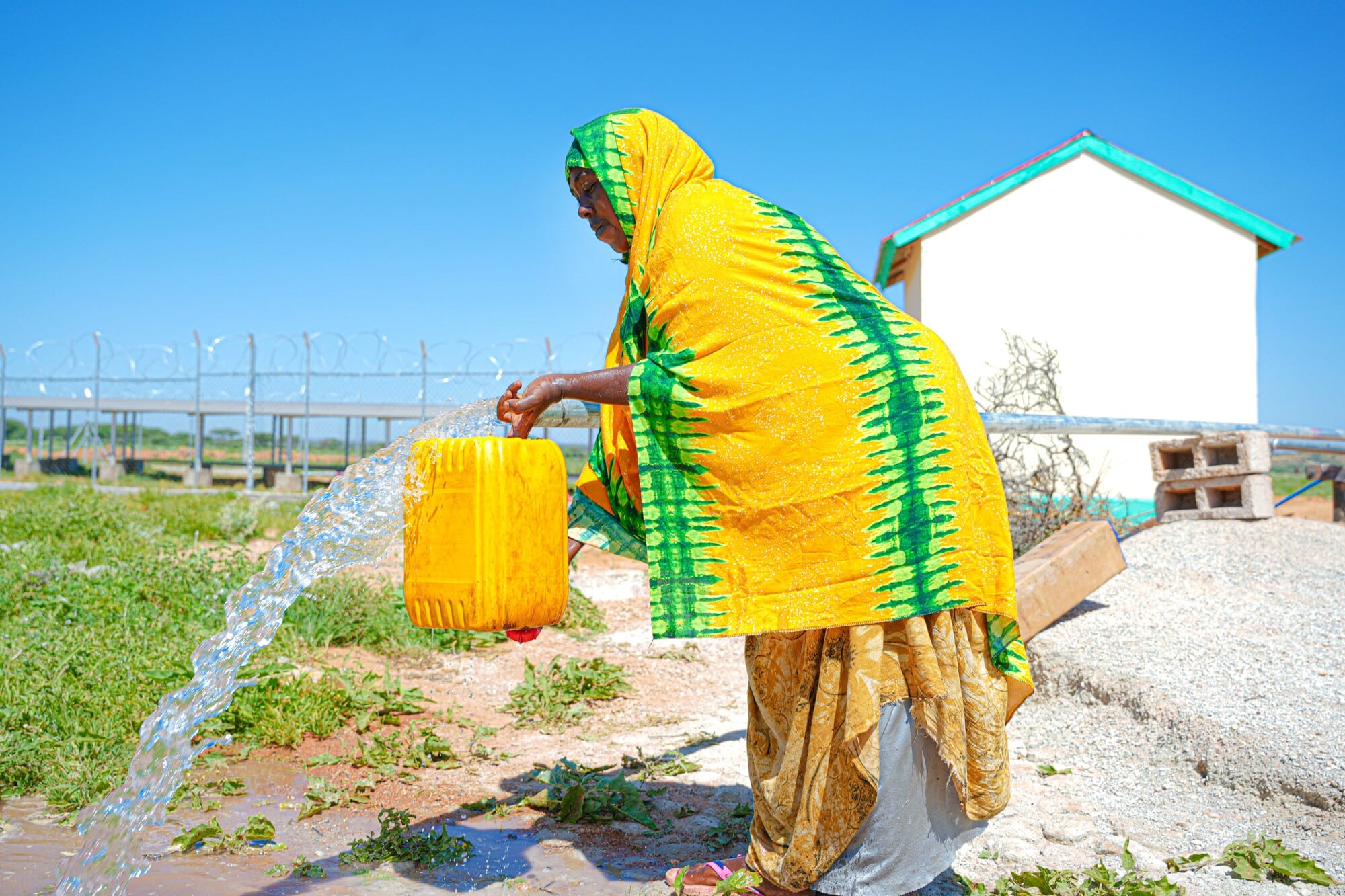
Yet there is another dimension of health that is far less visible, but just as fundamental. Access to safe drinking water, adequate sanitation and proper hygiene is one of the most important determinants of public health. When these conditions are lacking, the risk of communicable diseases increases rapidly, communities become more vulnerable and health inequalities deepen.
According to Oxfam Italia, more than two billion people worldwide still lack access to safe water. In areas affected by conflict, climate-related disasters or humanitarian crises, this vulnerability becomes even more acute. This is why WASH programmes go far beyond building infrastructure. They help secure the basic conditions for health, safety and dignity through water distribution systems, filtration and solar-powered desalination technologies, safe sanitation facilities, hygiene kits and community engagement initiatives.
A commitment aligned with our role in the healthcare sector
For OIC Group, supporting Oxfam is not separate from our day-to-day work. For fifty years, we have partnered with scientific associations, international organisations, institutions and healthcare companies to design congresses, educational programmes and experiences that foster scientific knowledge sharing and contribute to the advancement of medicine.
This privileged perspective reminds us every day that health is not determined solely by the quality of healthcare. It also depends on the conditions that allow people to access that care in the first place. That is why we have chosen to build a sustainability journey that extends beyond the way we organise events. It also reflects the causes we decide to support and the kind of impact we want to help create.
From sustainable events to healthier communities
Over the past few years, OIC Group has progressively embedded ESG principles into congress design, adopting an approach that views sustainability as a strategic component of the event experience rather than a collection of stand-alone initiatives. This means designing events that reduce environmental impact, promote inclusion and accessibility, engage responsible supply chains, enhance the value of host destinations and create a positive legacy for local communities.
Our partnership with Oxfam naturally fits within this vision. Because, in the healthcare sector, talking about sustainability also means asking which initiatives can make a tangible contribution to improving people’s health and well-being, extending the impact far beyond the event itself.
A shared responsibility
Organisations working in healthcare have an increasingly important opportunity, to connect scientific expertise, social responsibility and the ability to generate meaningful impact.
As an international Professional Congress Organiser, we believe this is precisely our role: creating connections that generate lasting value. That is why we will continue to work alongside partners such as Oxfam Italia, supporting initiatives that address some of the most fundamental determinants of global health. Because every congress has the power to advance knowledge, and every organisation has the opportunity to choose the change it wants to help create.